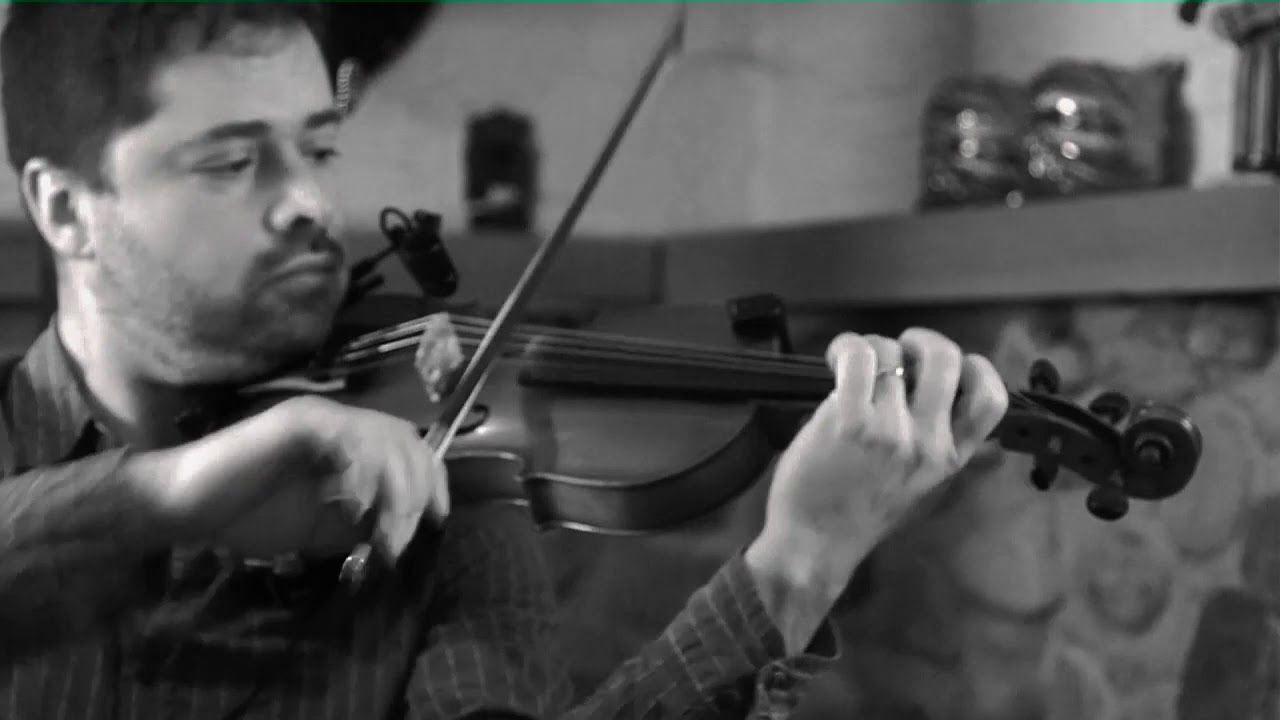
The Venezuelan cuatro is tuned A D F♯ B, from the string closest to the floor to the string closest to the ceiling. That is not the same as guitar. It is also not linear: the second string (F♯) sits higher than the first (B). Get that in your ear first, then the rest of the instrument starts making sense.
The four strings, named
Hold the cuatro the playing way, sound hole toward you, neck to the left if you are right-handed.
- Fourth string (closest to the floor): A
- Third string: D
- Second string: F♯
- First string (closest to the ceiling): B
Write it A-D-F♯-B. Say it that way too. If someone tells you to tune “like a ukulele,” stop. The instrument in your hands is a cuatro. Use the notes above.
How to hear it: the 5th-fret method
You only need one reference pitch. A piano, a tuner app, or another instrument that can give you a clean A.
- Tune the fourth string to A.
- Fret that same string at the 5th fret. That pitch is D. Match the open third string to it.
- Fret the third string at the 4th fret. That pitch is F♯. Match the open second string to it. Yes, the 4th fret this time. The interval here is different.
- Fret the second string at the 5th fret. That pitch is B. Match the open first string to it.
Check the first string against the fourth: fret the fourth string at the 2nd fret. That should be the same B as the open first string. If those two disagree, start again from A. Do not keep stacking a bad interval.
Why the second string feels backwards
On most guitars, each open string is lower than the one above it. On the Venezuelan cuatro the second string (F♯) is higher than the first (B). Players call this reentrant tuning. You will feel it the first time you strum an open chord: the bright note in the middle of the texture is that F♯.
If a tuner app keeps telling you the second string is “too high,” the app is thinking guitar. Trust the notes, not the string-number guess.
A tuner that does not fight you
Any chromatic tuner works if you read the note name, not the string label. Clip-on tuners are fine. Phone apps are fine in a quiet room. What you want to see:
- 4th string: A
- 3rd string: D
- 2nd string: F♯ (F# on most screens)
- 1st string: B
Tune up to the note, not down. If you overshoot, loosen past the pitch and come up again. The string settles better that way.
When it will not stay in tune
New strings stretch. A cheap tuner’s gears slip. Heat and travel move wood. If one string dies every few minutes, change that string before you blame your ear. If every string drifts, check that the cuatro is not sitting against a heater or in a car.
Once it holds, play an open G shape and listen. You should hear a chord, not a fight. That is the test, not the app.
What to do next
Tuning is the door. The next thing worth learning is where the natural notes sit on the fingerboard, then the first G major shape. Both are in the free course.
- Natural notes on the Venezuelan cuatro
- G major on cuatro
- Cuatro Basics (free course)
- Online cuatro tuner
Keep going. Free, and with a teacher if you want one.
Create a free TuCuatro Learn account and take the full tuning lesson inside Cuatro Basics, with video and the lessons that follow it. If you want a musician on the call, book a live class.
Create a free account Book a live class WhatsApp us
Prefer email first? Leave it here.
Or call +1 (613) 416-3412.